
01. Confirm
Ice, or something else
A dead line can also mean a closed valve, a failed pump or a break outside. That gets ruled out before any heat goes near the pipe.
24/7 Emergency Dispatch
One fixture giving nothing while the rest of the house runs normally?
A frozen line is a burst pipe that has not happened yet. We confirm it is ice rather than a closed valve or a break outside, thaw the run under control from the fixture side back, and stand there as flow returns, which is exactly when a split announces itself.
If this is happening right now, start with emergency plumbing in Buffalo and Erie County.
Frozen supply lines before they split.
As soon as a fixture loses water during freezing weather.
We use controlled methods instead of open flames or unsafe heat.
We thaw the line, check for damage, and recommend prevention.
Warning signs
Watch for these common symptoms. If you notice any of them, request an inspection before the problem gets worse.
A single fixture with no flow during a freeze may have a frozen branch line.
A partial freeze can restrict flow before the pipe fully blocks.
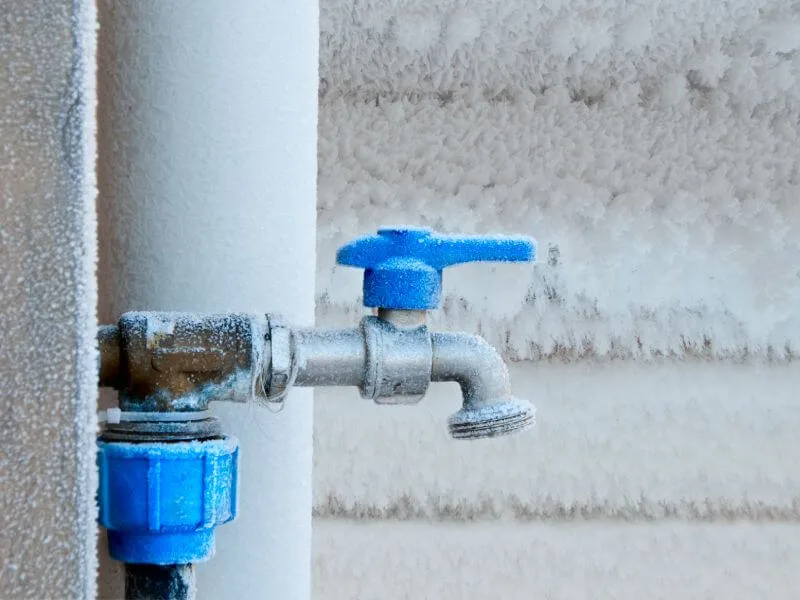
Visible frost is a warning that the pipe may already be under stress.
A swollen section can indicate ice pressure and an imminent split.
A cold room deserves a look.
A leak that appears as ice melts may mean the pipe has already cracked.
Water near electrical connections, a smell of gas, or sewage inside the building are safety matters before they are plumbing ones. If you smell gas, leave the building and call the gas utility before calling a plumber.
Thawing badly is how a frozen pipe becomes a burst one. Heat gets worked along the length rather than cooking one spot, and the line is watched as it opens.
01. Confirm
A dead line can also mean a closed valve, a failed pump or a break outside. That gets ruled out before any heat goes near the pipe.
02. Trace
The run is traced and the plug located by temperature along the pipe, then the fixture it feeds is opened so melting ice and released pressure have an escape.
03. Thaw
Heat is applied from the fixture side back toward the plug, and the line is watched as flow returns so a split is found with a plumber standing there.
What we handle
From small repairs to full replacements, here are the specific services included under frozen pipe thawing.
Safely restore flow using methods suited to the pipe location and material.
Learn moreRepair split sections and fittings after the line is thawed and inspected.
Learn moreWestern New York's freeze-thaw cycle finds the same weak points every winter, so we walk the crawlspaces, garages and exterior walls looking for the run that failed last year and is due to do it again.
Learn moreTest the line under pressure to catch cracks before they become larger leaks.
Learn moreConfirm connected faucets and fixtures work normally before we leave.
Learn moreHow it works
You always know what happens next, from your first call to a clean, tested, finished job.
Tell us what is happening and where, and we will arrange a visit.
Symptoms, the age of the installation, and a photograph if you have one. It decides what comes off the van.
We find the cause rather than the symptom, and tell you what it is in plain language.
You get clear options and approve the plan before any repair or replacement begins.
The work is completed, tested under normal conditions, and the area left clean.
Your options
Repair and replacement are both worth considering. Which one makes sense depends on what failed, how much of the run around it is in the same condition, and how hard the same spot would be to reach twice. You get that assessment before anything is decided.
| Factor | Repair | Replace |
|---|---|---|
| Condition | Best where one part has failed and what it connects to is sound. | Best where the failure is spread along the run rather than at one point. |
| Age | Makes sense where the rest of the installation has service life left in it. | Often the better call where the whole run is the same age as the failure. |
| Safety | Suitable where the fault is contained and nothing around it is compromised. | Recommended where corrosion, escaping water or gas makes a patch the wrong answer. |
| Accessibility | Easier where the fault can be reached without opening finished surfaces. | Worth it where reaching the same spot twice costs more than doing it once. |
| Parts availability | Depends on whether the parts are still made and in stock. | Avoids chasing parts for something obsolete every time it fails. |
| Long-term cost | Lower up front, though further failures on the same run may follow. | Higher up front, with less chance of us being back for the next one. |
We do not diagnose remotely. A technician inspects your system on-site before recommending repair or replacement.
A split announces itself the moment flow returns, which is exactly when you want a plumber standing there rather than an hour later. Damage found is repaired, then pressure is brought back up and tested.
Pipe insulation on every exposed run in unheated space, fitted so it wraps the pipe rather than sits behind it. Hose bibs disconnected and drained, interior feed valves closed, and crawl space vents shut for the season.
A trickle running from the furthest fixture on the coldest nights, and a thermostat held at a steady setting overnight rather than dropped, are the two cheapest things anyone can do on the nights it matters.
A frozen line does not stay a frozen line. Thawing it safely is the call to make before it splits and becomes a very different job.
Call for Emergency ServiceThe most common freeze point in the region, and the one most often left connected to a hose in October.
Plumbed through outside walls, where opening the cabinet doors during a hard freeze genuinely helps.
For the runs that freeze every year, correctly rated and installed to the manufacturer instructions.
Repairs, replacements and emergency work for Buffalo homes, priced before the work starts.
Premises that trade, back in service with the least downtime possible and documentation for the file.
Western New York cold snaps freeze lines in crawl spaces, exterior walls and unheated basements, and the older housing stock puts pipe in exactly the places that lose heat first. The freeze point is usually structural rather than accidental, which is why the same spot goes every winter until somebody insulates it.
Why choose us
Why Buffalo homeowners and businesses call Buffalo Emergency Plumber for frozen pipe thawing.
Work is focused on plumbing repair and replacement across Buffalo and Erie County.
You get a structured inspection, plain-language findings, and approved work before we start.
You approve the scope and cost before any repair or replacement begins.
We serve Buffalo and nearby communities across Erie County.
Standard diagnostic tools and common replacement parts used on-site.
Pricing
There is no price list for this work, because what it costs follows the job. These are the things that move the number. You get the figure before anything starts.
A single valve or fitting is a different job from replacing the run it sits in.
A weeping joint is less involved than a failure that has already done damage.
Part costs vary by material and size, and by whether they are on the van.
Crawlspaces, finished walls and ceilings all add time before the work starts.
Time to locate the cause is part of the assessment and estimate.
After-hours or emergency visits may carry an additional service charge.
Some work needs a local permit, and that is included in the figure you are given.
Request an assessment and we will explain the scope and cost before any work begins.
Service areas
We serve Buffalo and the surrounding communities across Erie County, NY.
An exposed run that we can reach and see usually opens up within the visit. A line inside a finished wall takes longer, because the heat has to travel through the structure before it reaches the ice, and rushing that is what damages the pipe.
On a pipe you can see and reach, yes, with the faucet open and working from the tap back toward the frozen section. Never a torch or an open flame, and stop if the pipe looks bulged or you cannot see the whole run.
Because only one run froze. The line feeding that fixture almost certainly passes through an unheated space or an exterior wall somewhere between the main and the tap, and that stretch is the one to insulate.
Sometimes. Ice can stretch a pipe without opening it, and the failure only shows when pressure returns. That is the reason to have someone watching the line as it comes back rather than thawing it and walking away.
On the runs most at risk, yes. Moving water is much harder to freeze, and a trickle from the fixture furthest along the line also relieves the pressure that actually splits pipes.
It depends on the job. What sets the price for frozen pipe thawing is how bad the failure is, the parts it needs, and how much has to be opened up to reach the work, so it is quoted after looking at it rather than from a price list, and you get the figure before anything starts.
We thaw them safely and repair any split left behind, across Buffalo and Western New York.
Call (716) 721-0115 NowTell us what is happening and we will call you back. Name and phone number are all we need to get started.